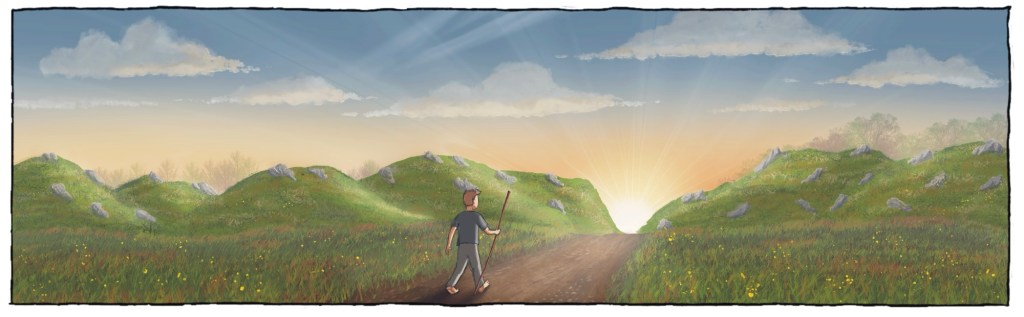
Wherever they live and however old they are, most people spend at least some of their free time reading or watching stories. Whether the story is in a book, comic book, a tv show, a movie, or even in a videogame, people love stories. Why is that?
First, they’re simply fun. Most everyone can tell us about a time their favorite movie or book really grabbed them. Read interviews with famous writers or filmmakers, they can all tell you about a moment when they lost track of time, when they became so engrossed in a book they were
reading or a show they were watching that when they finally finished it was waaay past their bedtime.
Engrossed: (adjective) Having all one’s attention or interest absorbed by someone or something.
They seemed to be engrossed in conversation.
This is why we love stories. They take us to wonderful lands far away from our everyday lives and allow us to participate in adventures that we couldn’t possibly have time for in between classes and homework.
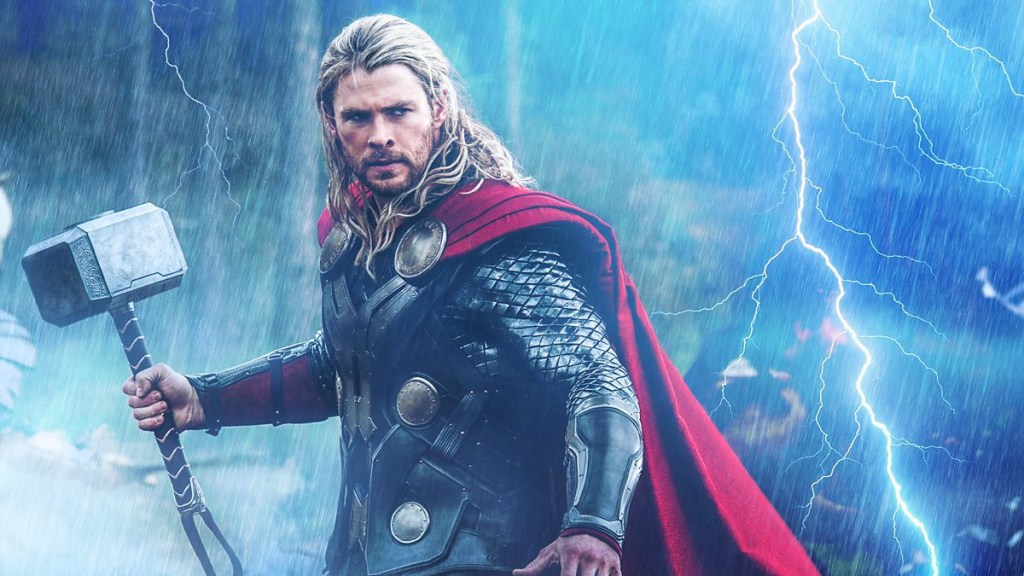
The stories of today grew out of the folktales and fairy tales people told around a fire long ago. It’s true; Ultraman, Harry Potter, and Teenage Mutant Ninja Turtles are the descendants of the myths and legends involving characters with names like Achilles, Zambe, and Thor (an ancient legend who’s been revived in Marvel comics and movies).

Fun Fact: the day Thursday is named after Thor!
All cultures and countries around the world have their own stories; many of us know of the tales of Robin Hood and King Arthur from old (olde) England or Beowulf from even further back. Separate regions of Western Africa had tales of heroes like Uncama and Kwasi Benefo. Ancient Greek mythological figures Achilles and Odysseus are well known.
Japan is full of ghosts and spirits, both good and evil, such as Nomori the Wilderness Guardian, or the goddess Amaterasu, whose presence can bring light to the world or take it away.
The point is that the old myths were the blockbuster movies or bestselling books of their day. These stories provided entertainment long before the first movie camera was invented. But they also had a different purpose: to teach.
Folk tales were created to teach values, ideas of good and bad, right and wrong. Think of the stories you learned when you were little, what did they say? The old western folk tale of the Tortoise and the Hare is meant to stress the importance of not resting until a task is finished. The Three Little Pigs encourages kids to do something well, whatever it is they’re doing.
principle: noun
a rule or belief governing one’s personal behavior: struggling to be true to their own principles / she resigned over a matter of principle.
Modern stories are no different. We’ll cover this in more depth later, but most of our heroes fight for principle. Today’s stories promote the values that we believe in, and our heroes represent those values.
What is a Hero?
To experience the adventure we need someone whose eyes to see it through. This is the main character, called the hero. Everything that happens in the story, we live it through him (or her – girls can be heroes too. Normally, the term for a female hero is heroine, but to keep things simple, we’ll use hero for both genders).
The purpose of the hero is to go on a journey. Not just any journey, but one of great danger, with a lot at stake. We accompany him on his travels as he encounters enemies, overcomes obstacles, and most importantly, sacrifices for the principles he believes in. The hero will give up his own personal comfort and safety in order to help others or save the world.
Sacrifice: verb
to give up (something that you want to keep) especially in order to get or do something else or to help someone
Nick’s parents made sacrifices so they could pay for his college education.
This journey will be the single most important event in the hero’s life. What happens during the course of the story will change who he is forever.
Everything that happens in a story is because of conflict. A journey wouldn’t be any fun if a hero didn’t have to do anything brave or exciting along the way. A story where the hero meets no resistance is about as thrilling as a visit to the dentist.
Instead, a great story puts the hero and her friends in constant peril, having to do extraordinary things in order to survive and succeed in her mission. Being a hero is a difficult and dangerous thing. Conflict makes the story exciting.
Conflict also reveals character.
Some words have more than one meaning. The word character is one of those, and this book uses two different meanings of it. When you read a word that can have two different meanings, you can usually figure out what the writer means to say if you know both definitions.
Character: noun
Strong moral qualities, such as courage or honesty.
We expect our leaders to have strong character.
Character: noun
A person in a book, tv show, or movie.
Many actors have played the character of Spider-Man in the movies.
Can you guess which meaning of character we’re using in this instance?
When someone is safe at home, it’s easy for him to be a good person. But when faced with danger, and doing the right thing could require him to sacrifice something, then we see who he really is. If he’s truly a good person, then he’ll do the right thing no matter the cost. This is what we mean when we say that conflict reveals character.
The Hero’s Journey
Let’s talk about what we mean by journey. Early in a story, our hero is made aware of a great danger to his world, and he must do something or risk certain destruction. This usually involves leaving his safe, comfortable life and traveling forth into unknown lands, on a journey to defend his home and the principles he believes in.
But sometimes the journey isn’t to a faraway land, but to a scary place right where he is. The heroes in Spider-Man, Stranger Things, and the new Ultraman never even leave their hometowns. Theirs is a journey into another kind of unknown. They stay where they are, but the place they live changes when they change. These heroes take a journey while staying at home.
In short, the journey can be an actual trip or not. The important thing is that the hero takes action and goes into the unknown, in some form. This book was written to help you understand why he takes the journey, and what happens along the way.
The History of Heroes
A university professor named Joseph Campbell spent his entire career studying the myths and stories of ancient cultures. He wrote many books and essays explaining his ideas, but one book in particular expressed the idea he’s known for to this day. In The Hero with a Thousand Faces, he explained that stories from all over the world have many things in common. Myths from cultures that were very far away had the same elements, such as events of the story and similar characters.
But most importantly, they all had one thing: a hero that went on a journey. It was Campbell who named the The Hero’s Journey. He said that the heroes of all cultures are really the same character adapted to different places. He called this idea the monomyth (mono is a prefix meaning ‘one’).
The folktales of long ago grew up and became the hit movies of today. In many ways, the blockbusters that dazzle us with the latest computer graphics are just the great-grandchildren of thrilling stories that people recited around the fire long ago, as Campbell showed.
You could be assigned to read Campbell’s books one day in school, especially if you go to college for Creative Writing, Anthropology, Cinema Studies, or History. His ideas are relevant to many different majors. The book you’re reading now uses his ideas to explain today’s most popular stories, maybe some of your favorites.
We’ll examine these stories and divide them into three elements:
- The events of the story, which Campbell called stages of the journey. Simply, these are the things that happen in the story.
- The characters, or people we’ll meet along the way (or talking animals, in the case of movies like Kung Fu Panda).
- The principles at stake. What do the heroes believe, and what are they fighting for?
As we experience new stories, we’ll look closely and try to identify similarities and differences between elements in different books, movies, and tv shows. Commonly, as a hero moves through his journey, it happens in three parts:
- Part 1: the hero in his ordinary world, and his decision on whether or not to go on the journey,
- Part 2: the main part of his adventure, all of the obstacles he has to overcome,
- Part 3: the darkest part of his journey. Consequences of the decisions he’s made throughout the story, both good and bad, and a final showdown with evil.
formula: noun
a conventional way of doing something
The author used an old formula for his latest murder mystery.
This is a model of how popular stories work, not a formula. Recent Hollywood movies treat the Hero’s Journey as a formula, and they never change anything about it. The adjective that describes something like this approach is formulaic. As you read more books and watch more movies, you’ll end up getting bored by stories that do exactly what the formula says to do.
You’ll notice that we’ll use the words ‘often’ and ‘sometimes’ a lot in the book. We need those qualifiers because good movies shouldn’t always follow the exact plan of the Hero’s Journey. Good writers listen to the characters, they consider the central conflict and think of how they would react when faced with certain obstacles. They make their characters do what they really would do in those situations, regardless of what the model says. Remember, the Hero’s Journey is really just a roadmap, but storytellers can take detours to follow their characters where they would go.
When you learn it, you’ll read books and watch shows that stray from the model in big ways. They may not have certain elements in the model, such as events or characters. Don’t let the model prevent you from enjoying the story you’re reading.
One more thing: in his books, Joseph Campbell was able to build the Hero’s Journey model by identifying things that were similar between myths and stories of different cultures. This is fine, and the similarities are strong enough that the model works.
However, thinking well also means seeing differences too. You may notice things that Harry Potter and Anna of Frozen have in common, but you should also notice things that they don’t have in common. It’s just as important to see the differences. As you grow, you’ll learn that looking only for similarities will cause you to blur your eyes so that things look the same, even if they’re not. Doing this is the opposite of seeing clearly, and seeing clearly is the first step to understanding. You need to see both when you try to understand – similarities and differences.


Leave a Reply