
Now the hero is on his journey, the Ordinary World is a memory. He has no choice but to move forward. He has entered Unknown Lands, completely unaware of the terrain and the rules it operates by. Part 2 of the story is largely about how he learns to navigate this new world.
Along the way, he encounters Tests of his abilities. He meets other characters. Friendly ones can become Allies, and unfriendly ones are Enemies that function as Threshold Guardians. The combined forces that oppose the hero are collectively known as The Shadow.
‘The Shadow’ is the blanket term that represents all of the bad forces that try to prevent the hero from reaching his goal. It’s the mirror image of everything that the hero fights for. Like the hero, the shadow has an external goal, an internal goal, and principles it represents, and all three are in direct opposition to the hero’s stated goals and principles. Harry Potter is obviously opposed to Voldemort’s external goal of killing him. In Kung Fu Panda, the villain Tai Lung’s principles are a stark contrast to Po’s essential goodness, and why he wasn’t named the Dragon Warrior.
Just as the hero represents the best in ourselves, the shadow is a collection of all our worst thoughts and impulses. We all have bad thoughts; we become good people by noticing these things in ourselves and not allowing those urges to dominate. The Villain, and other Agents of the shadow, never did that, and they are subject to their worst feelings. They represent who we could become if we allow the worst feelings to determine what we do and how we live.
So that’s the secret: it’s called The Shadow because it’s like the dark side of the hero himself – all the negative emotions that he rejects in himself are made real by agents of the shadow. In most stories, The Villain is usually the hero’s main opponent, and the main expression of The Shadow. He is all of the malevolence in the story represented by a character.
Malevolence: noun
the state or quality of being malevolent; wishing or doing evil to others; ill-willed; malicious.
The family could feel the malevolence from the evil spirits haunting the house.
While a hero is on a journey with an internal goal – a quest to change themselves for the better – the villain generally doesn’t question himself or his motives. He knows what he wants and is immune to criticism, unwilling to change.
But while most stories will have characters that oppose the hero, whom we refer to as Agents of the Shadow, not all stories have one single villain.
In many stories, especially in more recent Disney movies, the stories have no true villain. Instead, many heroes fight against an evil force, not a character. Moana takes the journey to cure the environmental collapse her island is suffering; even in the final showdown, we discover that the monster trying to destroy Moana isn’t really what we think it is. Raya and the Last Dragon has many agents of the shadow, especially Virana, but the true evil is the Druun, mindless puffs of smoke that plague the land, destroying lives with no thought or agenda. Keep this in mind throughout the book, as we refer to villains; sometimes the hero instead has to overcome another kind of obstacle instead.
In stories that do have a villain, it’s possible that the villain personally opposes the hero at each threshold, but it’s more likely he has henchmen – Enemies of the hero – to do his bidding. Often, the hero and the villain don’t even meet until their final showdown, but the villain’s presence must be made known through dialogue or the obstacles his underlings place in the hero’s way.

When watching a movie or reading a story, think about why characters act the way they do. Regarding the villain, is he the way he is because of something he has, such as unconstrained ambition and greed, or something he lacks, like empathy for others or an understanding of the common good?
Sometimes villains act the way they do not because of an evil motive, but because of normal feelings of fear. Think of Harry Potter’s archenemy Lord Voldemort. By the end of the series, we’ve become aware that he does everything he does with a goal of living forever.
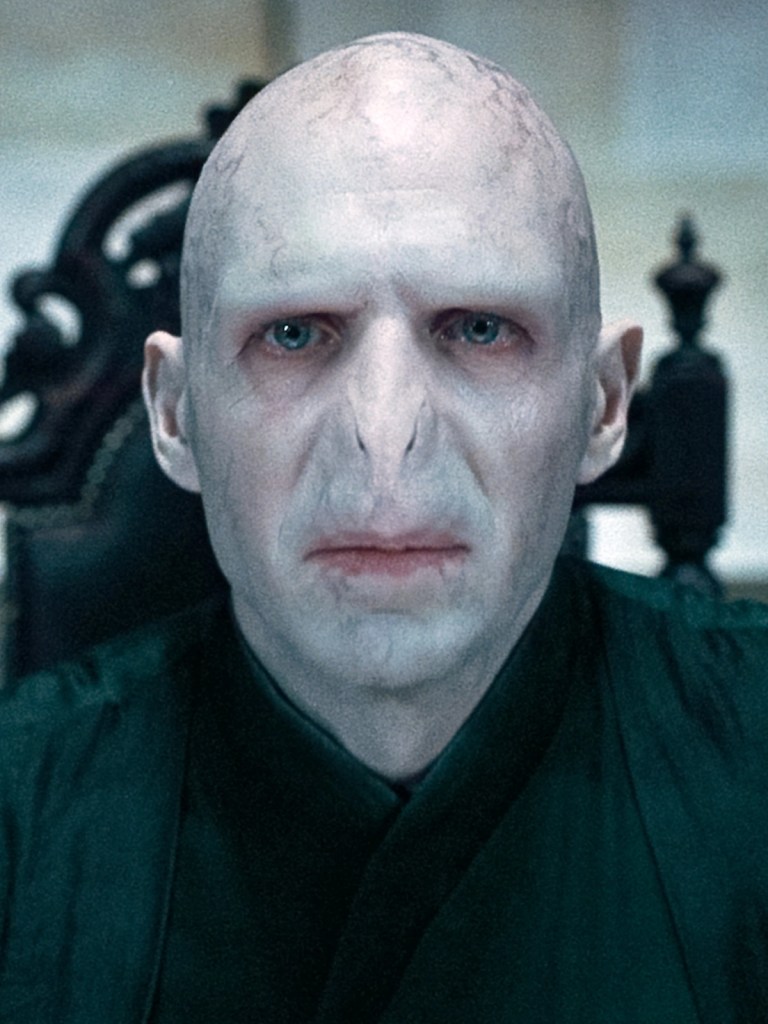
It’s normal to be afraid of death, and dying is Voldemort’s biggest fear. That’s a feeling a lot of people have in common, but would we go to the extreme lengths he would – killing people, terrorizing both his enemies and allies – to ensure everlasting life?
Agents of the Shadow – Virana in Raya and the Last Dragon
Since we examined the hero of Raya, looking at one of the movie’s Agents of the Shadow allows us to contrast the two. Some may think of Raya’s main rival Namaari as the villain. But Namaari has reservations about many of the actions that she’s ordered to take.
In truth, Namaari’s mother Virana, while not the villain, is the true expression of The Shadow. She is untrusting of others and limits her ambitions to protecting her own people, even at the expense of all others. Early in the movie, she attempts to steal the one magic gem that protects people from the evil of the Druun, shattering it in the process.
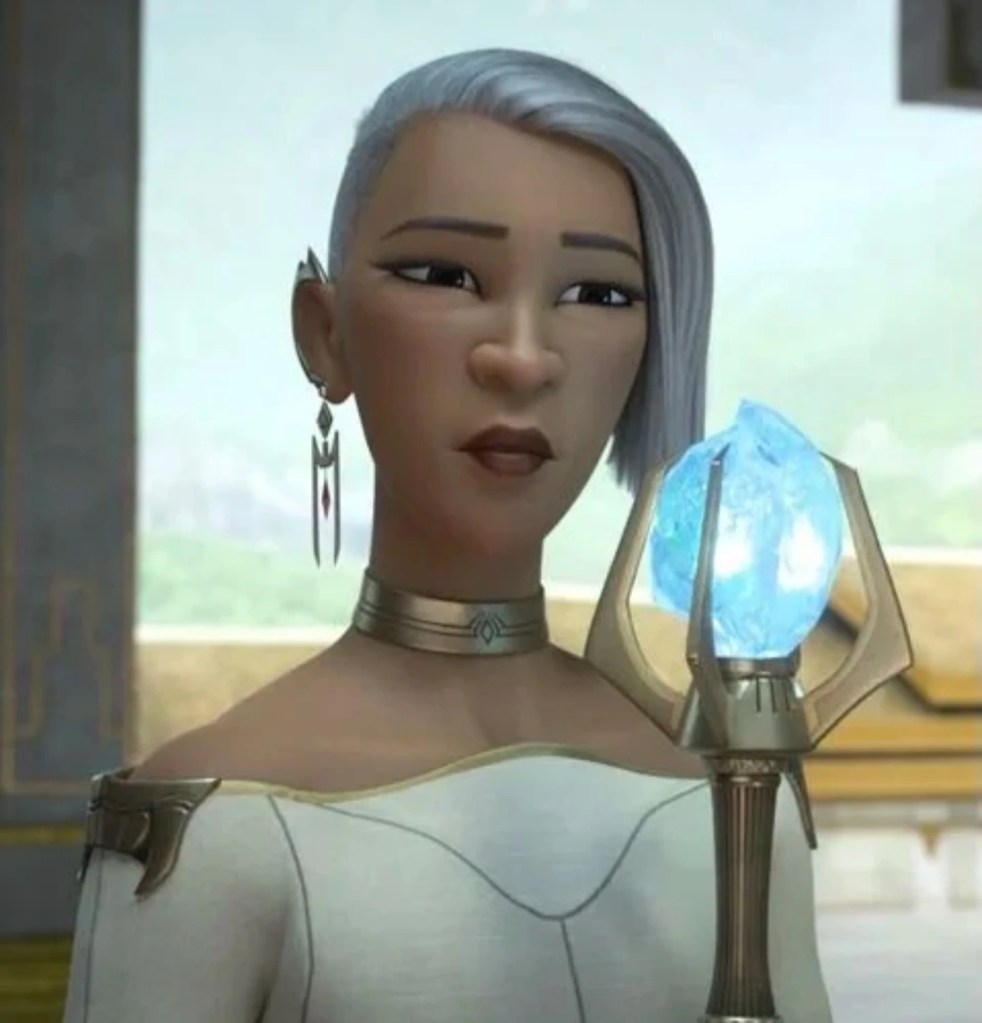
Years later, she’s unchanged, and she wants to pass her selfishness and suspicion onto her daughter Namaari. They no longer have any hope for the wellbeing of the land due to the absence of their dragon protectors. Virana sends Namaari on a mission to steal the remaining pieces of a protective gem for their homeland of Fang, and only Fang.
However, while on the mission, Namaari actually encounters Sisu, the dragon of the title, in person. She returns to her mother to report.
Namaari: Mother, you won’t believe what I saw!
Virana: You saw a dragon. The general informed me that you would be returning home without the gem pieces.
Namaari: It was Sisu! She can fix what we broke. She can bring everyone back!
Virana. And that’s what scares me. When everyone comes back, who do you think they’ll come for? You forget, the other lands blame us for what’s happened.
Namaari: But we never meant for anyone to get hurt.
Virana: Yes, but if we had the dragon and the gem pieces, we would be forgiven. We would save the world, but more importantly, our people would remain safe.
Namaari: But Raya isn’t just going to give Sisu to us.
Virana: We’re not going to give her a choice.
Namaari: What are you going to do?
Virana: That’s no longer your concern my love. You’ve done enough.
(Written by Qui Nguyen and Adele Lim)
Virana should be overjoyed about the existence of a living dragon, one that could save everyone from the destructive Druun and revive their loved ones who were lost. Rather, she can’t see past her own selfish motives. Even the possibility of salvation isn’t enough to get her to consider the greater good.
Regarding goals and principles, she opposes Raya directly:
- Her external goal to obtain the gem pieces to protect Fang puts her at odds with Raya, who wants to collect the gem pieces to save the entire world of Kumandra.
- Raya’s internal goal is to overcome her own suspicion and lack of faith, and those qualities are exactly what drives Virana.
- Virana no longer believes in the ideals of unity and universal friendship that Raya fights for, and her mistrust of others is why she keeps fighting for disunity. Virana is an agent of the shadow because she fights for herself, not for principle.
Since the villain is someone who can’t change and doesn’t even consider it, what does that tell you about the value of self- reflection and consideration?
- Try to look at the events of stories from the villain’s perspective sometimes. Remember, each character is the hero in their own story. They see our hero as their villain. When you see things through their eyes, ask yourself:
- How did they come to see things the way they do? Does their experience excuse their behavior? In the X-Men movie series, the main villain, Magneto, has been scarred by his experiences as a young boy in Nazi Concentration Camps, and has lost faith in all of humanity as a result.
- Could a villain actually be right about some things? From a reader’s perspective, a villain becomes more believable if they have some ideas that we can understand, even if we don’t agree.
- Writers and filmmakers do a lot to ensure that you feel about characters the way they want you to feel about them, but don’t surrender your thoughts and feelings. Determine foryourself how you feel about characters – it’s your choice. I have seen poorly written movies where, halfway through the movie, I realized that the bad guy was right. In spite of the minor chords and sinister framing the filmmakers used to make me hate him, I refused to feel about the so-called villain what they wanted me to. Use your own ideals and principles to guide you.
Tests
For the rest of the story, the hero encounters Tests. Are they tests like the ones you take at school? Well, they’re usually more active than sitting at a desk and writing, but they are similar in that they’re both difficult tasks that our hero must complete before being allowed to move on in the story (or to the next grade).
We’ve already discussed her first test – the First Threshold. That was a clue as to the kinds of hardships that await her later in the story. At this point, the tests are not as deadly serious as the ones she’ll face later, but they can’t be ignored either. All of the tests culminate in one big conflict at the end, called The Showdown.
Not all tests are the same; there are many different kinds, though a clever writer can always invent new ones.
- Direct Confrontation: agents of the shadow, whether the villain or his henchmen, appear and attack the hero and her friends directly. This is the most common test, and one that most heroes will encounter at some point. Each episode of Ultraman forces him to fight yet another monster or alien bent on Earth’s destruction, to cite one example.
- Traps and Deception: sometimes the shadow will set traps for the hero, or deceive her in some way. In Harry Potter and the Order of the Phoenix, Lord Voldemort fools Harry into thinking that his godfather Sirius is in danger, luring him into a trap.
- The Race: the hero could be running to get ahold of some object or achieve some goal before the villain does. In Avengers: Endgame, the team of heroes are in a race against the evil Thanos to get all of the Infinity Stones, which he needs to further his plan of killing half of everything that lives.
- A Test of Worthiness: the hero might be forced to prove herself in some way. In the traditional King Arthur legend, the young Arthur, yet to be king, proves to be worthy of the crown by removing a sword from the stone it’s been lodged in for years. A more recent example can be found in the graphic novel Amulet, where Emily and her ‘frenemy’ Prince Trellis are forced to solve a puzzle to grant them access to the flying city of Cielis.
- The Ticking Clock: there could be a time limit for the hero to achieve some goal, or a specified period for which he has to survive. In the Pixar movie Coco, the young hero Miguel must get his family’s blessing before sunrise to avoid being stuck in the Land of the Dead forever.
- Environmental Obstacles: the hero might be forced to traverse dangerous ground, such as mountains, deserts, or bodies of water that could slow or halt her progress. In The Lord of the Rings: The Fellowship of the Ring, the inability of Frodo and his friends to successfully cross a treacherous mountain range forces them to pass through the monster-infested Mines of Moria. (Note that when discussing environmental obstacles, in most cases, dangerous wild animals also fall into this category, such as in Frozen, when Anna is attacked by wolves on the mountain.)
Storytellers are limited only by their imaginations. Really, a writer’s first job is make life hellishly difficult for the hero, and the more ways he can do that, the better the story.
- Outside of school, have you had tests or ordeals in your life? What kind of test was it? Was it like one of the ones we discussed? How did you overcome it?
- How did it change you? How did it change your life?
- What tests or ordeals do you think you’ll need to endure to get where you want to be in life? It could be like a test in school or university, such as medical school or a professional certification, or something more physically rigorous, like basic training in the army. Think about it now, and you can start preparing for it.
Allies and Enemies
On the journey, the hero can expect to meet other people. Some of them may be neutral, but the most active characters will be on one side or the other – for or against the hero. These characters are Allies and Enemies.
Allies (singular: ally) have goals or beliefs that are aligned with the hero’s. They usually have the same external goal as the hero, or they believe in the same principles, though they might also help solely out of self-interest.
When do we meet them? Often allies are present early in the story, before the hero’s call to adventure, but on a real journey, it’s not unusual to meet them at different points along the way. They could either help the hero at one threshold and then bid him farewell when the hero moves on, or, more commonly, they could join the hero on his quest and stick with him until the end.
We’ve already discussed the first and most important ally in the person of the Mentor. Just like the mentor, allies can provide the hero with a great deal of help, but it must be the hero alone who achieves victory in the end (I sense you’re seeing a pattern here).
Allies are great for exposition, the way a writer or filmmaker explains things in the story. Thoughts and ideas that a character might not usually say aloud could be expressed in dialogue, when explaining things to other characters. If the hero is alone, we might not ever hear what he’s thinking, especially in movies and tv shows.
I expect that by now you’ve already thought of a few allies to the hero in some of your favorite stories. Some examples:
- Ron and Hermione are, obviously, Harry Potter’s closest allies, and we meet them early in the first book. They quickly become friends, and once Harry receives the call, there was no question that they would join him on his adventure. These two accompany Harry on his entire journey, but other characters who help him along the way include an assorted collection of teachers, fellow students, and old friends of his father.
- Raya meets her allies having already answered the call in Raya and the Last Dragon. It’s common for allies to possess particular skills the hero doesn’t in order to make a team with a variety of talents. Among Raya’s allies, Tong is the giant strongman, the baby Little Noi is a master thief, and Boun has the boat that’s their primary home and mode of transportation.

The Other Spider-beings in Spider-Man: Into the Spiderverse
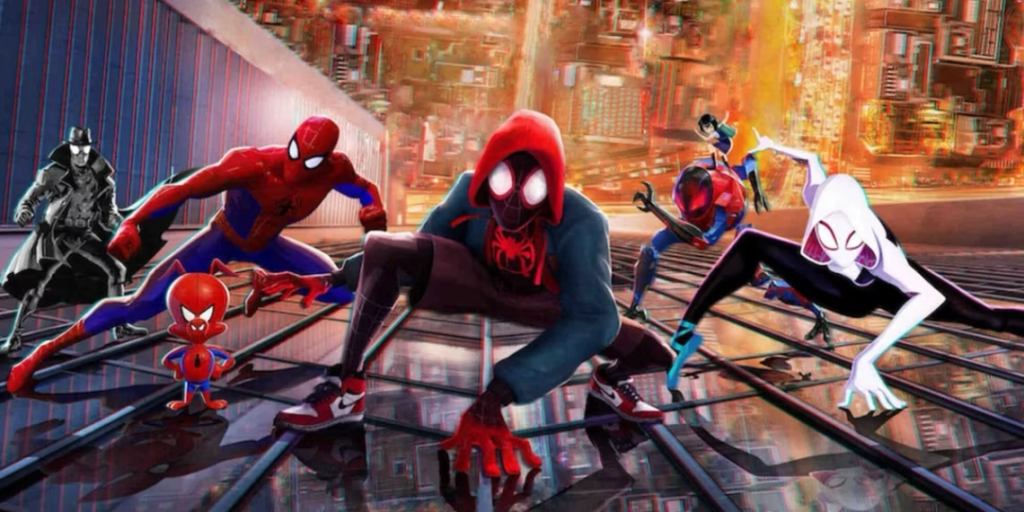
After Miles Morales discovers his powers, he’s visited from Spider- beings from other dimensions (Spider-beings? I can’t call them Spider-Men; not all of them are men, and they include a robot and a pig).
The original Spider-Man, Peter Parker, is the Mentor, giving Miles advice on how to proceed and master his skills. The others leave the teaching to Peter, but they join Miles on his journey to repair the cracks in the walls separating their dimensions so they can all return to their worlds. They fight together for the same goal and protect one another, making them the allies.
Spider-Man: Into the Spider- verse, like most superhero stories, follows the rules of the Origin Story, in that the first movie or book is really just a setup for his future adventures, which are episodic in nature. We’ll cover Origin Stories later in the book.
Enemies
Enemies are the dark counterparts to the allies. Their function is as Threshold Guardians, to stop the hero from advancing on the journey.
Anyone who gets in the hero’s way is classified as an enemy. Even if they’re unaligned with the villain, as long as they try to prevent the hero from doing something good, they are Agents of the Shadow.
Almost everything we say about the hero’s relationship with his allies is also true of the villain’s relationship with his underlings, but in reverse:
- They can help the villain to defeat our hero, but it must ultimately be the villain who will oppose our hero in the final conflict.
- The enemies are useful to the writer to allow the villain to verbalize his thoughts and feelings, but there really isn’t any discussion of ethics or conscience; the villain has no interest in being good.
- While the hero and his allies rely on the bonds of friendship and shared purpose to keep them together, oftentimes the villain relies on intimidation and a desire for domination to unite them.
While the hero is in Unknown Lands, the villain and his crew are right at home here. This gives them an advantage over the hero – they are born fighters on their home turf.
In movies and stories about wars or some other big fight, the opponent’s soldiers are enemies, such as the stormtroopers in the Star Wars movies or the orcs in Lord of the Rings. If the villain is a kind of gangster, the members of his gang are the enemies.
- In Ultraman, the various monsters and aliens who invade Earth are the enemies, with Ultraman being a kind of supernatural cop to protect the citizens of Tokyo.
- In the Lord of the Rings books and movies, the great villain is Sauron, and he’s aided by the rotten wizard Saruman, the nine evil riders referred to as the Nazgûl, and legions of monsters called orcs.
The Elves of Amulet
In the graphic novel series Amulet, Emily Hayes and her brother Naivin are trapped in a secret world called Alledia, and find themselves in a dystopia ruled by an evil Elf King. The story keeps you guessing as to who the true villain is, and whether the King is actually in control.
Nonetheless, the being that inhabits the Elf throne is a cruel oppressor, obsessed with finding Emily and eliminating all threats to his reign. He uses his armies to further his goals, and Emily has to learn how to use her newfound magical abilities to fight her Enemies, the Elves of Alledia.

- For most of us, the idea of an enemy is really nonexistent. Living your life in a way that’s productive and not in search of conflict should eliminate the idea of a true enemy. You may have rivals in some things, though – in sports, for instance, or in a debate club.
- If you do have a so-called enemy, why are the two of you opposed?
- What is the nature of your conflict, and can it be resolved? Is it because you both want the same thing, or could it be a conflict of opposing ideals and principle? Could it be a simple misunderstanding? Think of ways to reduce the amount of conflict in your life, and you’ll be a lot happier.
The Midpoint
The hero is now far from home, and crossed the First Threshold, the one that resulted in him taking the journey. He’s encountered enemies and passed obstacles that were threats to him and his allies. Now it’s time for the next big test: the Second Threshold.
The Second Threshold happens around the middle of a movie or book, which is why screenwriters call it the midpoint. A story can’t take too much time between exciting events or we, the readers or viewers, will get bored. That’s why this particular moment happens halfway between the First Threshold and the next one.
Most of these events have specific purposes. The First Threshold is the hero’s first experience leaving his Ordinary World, and convinces him of both the necessity and danger of the mission he’s undertaking. Later, we’ll learn about The Entrance to the Villain’s Lair, which is the hero’s final push before the final confrontation with the villain or the ultimate evil force.
So what’s the purpose of this, the Second Threshold? That’s a tricky question, writers use this moment for a lot of different purposes. Remember the Journey is a guide, not a formula; not every story has to do the same thing. But it’s important to keep pressuring the hero so he continues moving forward. A hero that stops moving results in a story that stops being fun. So the midpoint has to increase the pressure on the hero; every threshold raises the stakes somehow. Here are some of the ways that storytellers have used this event:
- Surprise and Reassessment. New information comes to light, perhaps something shocking that changes the whole game. The hero has to reconsider the entire journey; what his goals are, how he goes about achieving them, who to trust.
- Fake Victory. The hero has reason to believe that he may have won already, and that the end of his journey is at hand, only to have victory snatched from him, and it seems that he’s further from his goals than ever. In Coco, Miguel is about to receive the blessing from his great-grandmother that will send him back to his family in the living world, only to have his dreams crushed when she adds the condition that he abandon his dream of becoming a musician. Miguel can’t accept her demand, and he has to figure out another way to return home.
- Fake Defeat. The inverse of Fake Victory, the hero thinks he’s failed, only for something to emerge that gives him a ray of hope that allows him to continue. In Mulan, the hero character had been dressing as a man to defend her country; she’s revealed as a woman at the midpoint. She’s expelled from her unit, in spite of all her heroic deeds. Mulan returns to the conflict when she witnesses the enemy army approaching the capital, and feels duty-bound to warn her old commander.
- A New Approach. He hasn’t been defeated yet, but it’s clear that whatever he’s doing won’t work. He and his team stop to re-evaluate their approach and consider a new way forward.
- Reconfiguration of the Team. Sometimes a character, or characters, will reconsider their goals and how to achieve them and create new alliances. In Moana, the demigod Maui has been selfish, refusing to assist Moana in her quest to heal the world. But he finally becomes an ally when she agrees to help him recover his fish hook, the item that magically allows him to transform into different creatures.
Regardless of what happens, the Second Threshold changes the story in a fundamental way. The hero has a new outlook on his mission, and so should we.
Disappearance of the Mentor
The journey is about testing the hero and forcing him to realize his potential. One condition of growth is that we stop relying on our teachers and parents and learn to stand on our own. In order for the hero to take the final step in his growth, the Mentor has to disappear. The hero must now rely on what he’s learned, and only utilize his own skills and abilities to defeat evil.
This part is called the “Disappearance of the Mentor”, and why it happens varies from story to story. Usually the mentor dies, but he doesn’t have to. Also, the mentor’s disappearance can happen at many different times in the story; in Moana, the mentor character of Gramma Tala dies very early in the story (though she later returns as a spirit). In Spider-Man: Into the Spiderverse, the mentor character of Peter leaves just as Miles faces his final test, The Showdown.
The important thing is that he or she is absent when the hero faces the villain in a final conflict. The Mentor’s disappearance is a major wake-up call for the hero; perhaps he had been counting on the support of his teacher for the rest of the journey, but now he knows that he’s on his own.
Some of the ways that the mentor leaves include:
- Death. The mentors die in stories like Raya and the Last Dragon and Amulet. This is the most common way of removing the mentor character, as it has the added advantage of illustrating the grave consequences of failure. Consider not just one book, but the whole Harry Potter saga: Dumbledore is killed in the second-to-last book, leaving Harry to complete his mission and face Voldemort alone, as he must.
- Sacrifice. Sometimes the mentor’s death is actually a sacrifice, when they purposely surrender themselves. Obi-Wan in Star Wars, Gandalf in Lord of the Rings, and Bing Bong in Inside Out are all mentors who sacrifice themselves to save the hero or preserve the mission.
- Abduction or Imprisonment. The agents of the shadow might not be able to catch the hero, but they’ll do whatever they can to weaken him. If they can trap his teacher, who’s to say that he’s learned enough already to succeed? In The Matrix, Morpheus is captured by the Agents when he sacrifices himself to save Neo. Neo takes it upon himself to rescue Morpheus, realizing his destiny of becoming ‘The One’ who can save humanity in the process.
- Distraction. The Mentor is fooled into abandoning the hero at a crucial time, realizing too late that it was a ploy by the shadow to remove him from the picture. Though he eventually dies, in the first book Dumbledore is called away on an urgent mission, leaving Harry and his friends to save the day by themselves.
Bing Bong of Inside Out
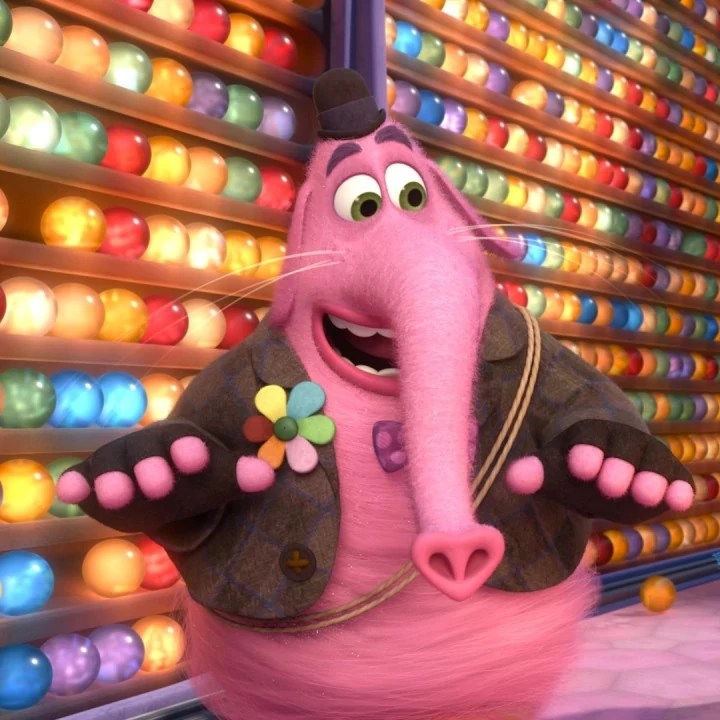
The ingenious plot of Inside Out takes place inside the mind of a young girl named Riley, and makes characters out of all her emotions. The hero Joy meets Bing Bong, an imaginary friend of Riley’s from her early childhood. He’s been lingering in her mind, though she hasn’t really thought of him in a long time.
Recruiting Bing Bong to help her on the journey, Bing Bong realizes that in order for Joy to succeed, he has to sacrifice himself not only to death, but to being forever forgotten by Riley. He does what the mentor must do, and in helping Joy to succeed, he passes from all memory.
Now that the mentor is out of the picture, the hero takes the final steps forward. Though he may still have the support of friends and allies, he’s lost the guidance and strength of his mentor at a crucial moment. He has no choice but to forge ahead to the most dangerous land, the home of the shadow, alone.
- Can you think of a time your mom or dad helped you with something that you later could do by yourself? How did you feel before you did it by yourself the first time? How did you feel after you did it?
- Your life at school is about preparing you to stand on your own someday. That moment might be the most important one of the hero’s journey, and one of yours as well. What are you doing to prepare for that moment, and to design the life that you want when that time comes for you?
Actions and Reactions
This book centers itself around the events of the story. However, the main characters aren’t passive observers to these occurrences; rather, they’re active participants in how things unfold. Their actions affect the story directly and determine the path it takes; how their opponents react changes the situation again. In short, the story is a chain of events that the main characters make happen.
In this way, an adventure can be like a board game, and each scene in a movie, or chapter in a book, is like each player’s turn. Taking into account what they know and what the possible outcomes are for each move, the players act and then wait for their opponent’s reaction. The game begins with the Inciting Incident. From then on, the actions of his opponent motivate the next move our hero makes, whose response then motivates the villain’s next decision.
Stories are designed so that everything the main characters do, including allies and enemies, affects the path of the story, and determines who wins the prize that hangs in the balance. The hero’s decisions can also be affected by environmental factors, as we’ve mentioned, such as a dangerous place or wild animals. These are Threshold Guardians, whether they’re characters, terrain, or wild animals, and our hero has to be active in his responses to the forces that oppose him.
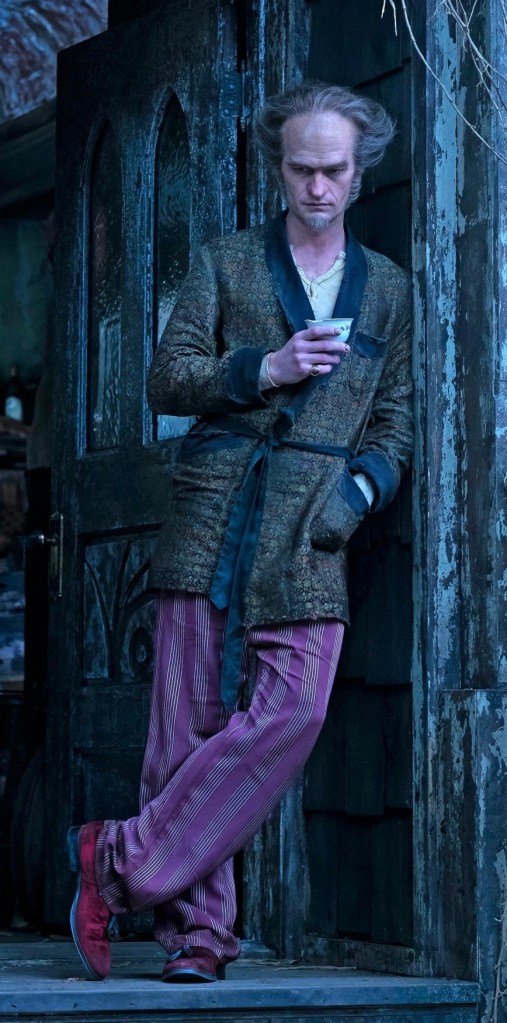
To help understand how it works, let’s consider the first book in Lemony Snicket’s A Series of Unfortunate Events titled The Bad Beginning. The Inciting Incident is when the parents of the three Beaudelaire children are killed (more orphans). After a period of adjustment, they’re placed in the care of the evil Count Olaf, who schemes to seize their inheritance. From then on, each move of the children is made to foil the plans of Count Olaf, who then responds in turn:
- Count Olaf concocts a plan to steal their money. An actor, he orders Violet, the oldest child, to act in a play with him where the two characters are to be married.
- Klaus, the middle child, figures out Olaf’s plan – the marriage in the play will be officiated by an actual judge, making it an actual wedding, the ceremony an actual marriage, Count Olaf her actual husband, thus giving him control of the children’s inheritance. He tells Count Olaf, hoping that it will cause him to abandon the plan.
- Instead of giving up, Count Olaf pivots: instead of trying to fool the children, he turns to coercion. He kidnaps Sunny, the youngest child, and tells Violet that she and Klaus must cooperate, or Sunny will die.
- Violet attempts to rescue her little sister, but is captured by one of Olaf’s henchmen.
- The children are then locked up in a room to keep them from attempting any further rescues until the night of the play. Sunny is kept hostage in order to maintain his control over the other two children.
- During the play, it appears that Count Olaf’s plan has worked – he declares victory and orders Sunny freed.
- Violet, however, had figured out a legal loophole that nullified the ceremony, and she reveals it after Sunny is freed from the clutches of Count Olaf and his henchmen.
- Before fleeing, Olaf vows to Violet that he will someday succeed in getting ahold of the children’s fortune. The first book sets up the series as an origin story; we’ll discuss those later.
Note how each step in the story is a reaction to the previous action by their opponents. Count Olaf schemes: Violet or Klaus attempt to foil his plot: he reacts accordingly. The children and Count Olaf are actively making things happen in the story; the events are a result of their actions.
Secondary characters like allies, enemies, and incidental characters can be passive, but not our hero or agents of the shadow – they’re in a fight with too much at stake.
Preparation for the Final Approach
Though she may still have friends, the hero is truly alone in a larger sense, at a time when she realizes that there’s no other choice but to go forth into the home of the Shadow, the Villain’s Lair. This is where they have to go to defeat evil.
The Disappearance of the Mentor has shown our hero that the consequences of her journey are larger than she ever guessed; nothing less than life and death, not only for her and her friends, but for the world as she knows it. If she fails, everyone she loves will suffer as a result.
Considering the stakes, our hero knows that she can’t quit; there’s no choice but to go to the heart of evil to defeat it. For the first time, she realizes how much she’s been relying on her mentor to guide her; now her fear comes from the fact that she no longer has the support of her guide and teacher, and she is on her own.
She may or may not be completely alone; she could still be accompanied by friends and allies at this point. If she is, her friends are only the most loyal ones, the truest ones. Now is the time for a pause and reflection before they make the final push into the Villain’s Lair. The writer could use this time for several practical or dramatic purposes:
- The hero and her friends could take a moment to discuss their situation and summarize everything they know, both for themselves and for the reader / viewer. They could talk about:
- Where they have been and what they’ve learned,
- What could lie on the road ahead (they don’t know for sure), and a strategy for winning, though that seems unlikely now.
- The tools they have, and what else they could rely on.
- The heroes may use this moment, the most serious and dramatic one yet on their journey, to confess their affection for one another, and their appreciation of each other’s help. If some characters have been bickering up until now (common with two characters who are actually in love), now’s the time for them to bury the hatchet.
In truth, they’re facing a real possibility of dying. These are the times – the anticipation of mortal danger – when people drop the masks they’ve been wearing and stop pretending. These are the moments when people are the most honest they can be, considering that they may not be around to say these things afterwards.
The Final Threshold
In this, the darkest moment for our hero, her mentor is gone and defeat seems inevitable. Yet she knows she must continue and move on to the Final Threshold, the last obstacle before her final showdown with the villain himself.
This last conflict is essentially the same as her other battles, but with higher stakes. As is the case with the other thresholds, she could be having one last fight with some of the villain’s minions, underlings of the Shadow, or she may have to traverse one last environmental obstacle.
If it’s a fight she engages in, she could either win it to move on, or she’s defeated and captured, ready to be presented to the Villain as a prize by his agents.
There’s another possibility; the hero is simply allowed to pass the final threshold with no resistance for some reason. This can happen when the Villain believes that victory is assured, or when he no longer trusts his own allies to defeat the hero, deciding to handle it himself.
Persevere: verb
to continue in a task or course of action or hold steadfastly to a belief or commitment, esp. when met with opposition or difficulties; persist.
The journalist was threatened several times, but he persevered in telling the truth.
In the final Harry Potter book and movie, Lord Voldemort engages in a fierce battle at Hogwarts. Having inflicted great damage he believes, correctly, that Harry would surrender himself in order to spare his friends. Harry goes willingly, and none of Voldemort’s supporters do anything to stop him.
At this point, the overriding feeling in most stories is one of dread, but the hero perseveres for honor and principle.
- What principles must be at stake to motivate you to move forward into danger?
- What friends and allies in your life would you trust to accompany you to your final showdown with evil?
- This is the moment when friends and allies are truly honest with one another, dropping their masks, so to speak. What things are unsaid between you and the people you love? Should you tell them these things now?


Leave a reply to Part 1: The Ordinary World – Adventure! Cancel reply